
Upland, CA · Garage Door Service
Garage Door Roller Replacement for Upland Homes
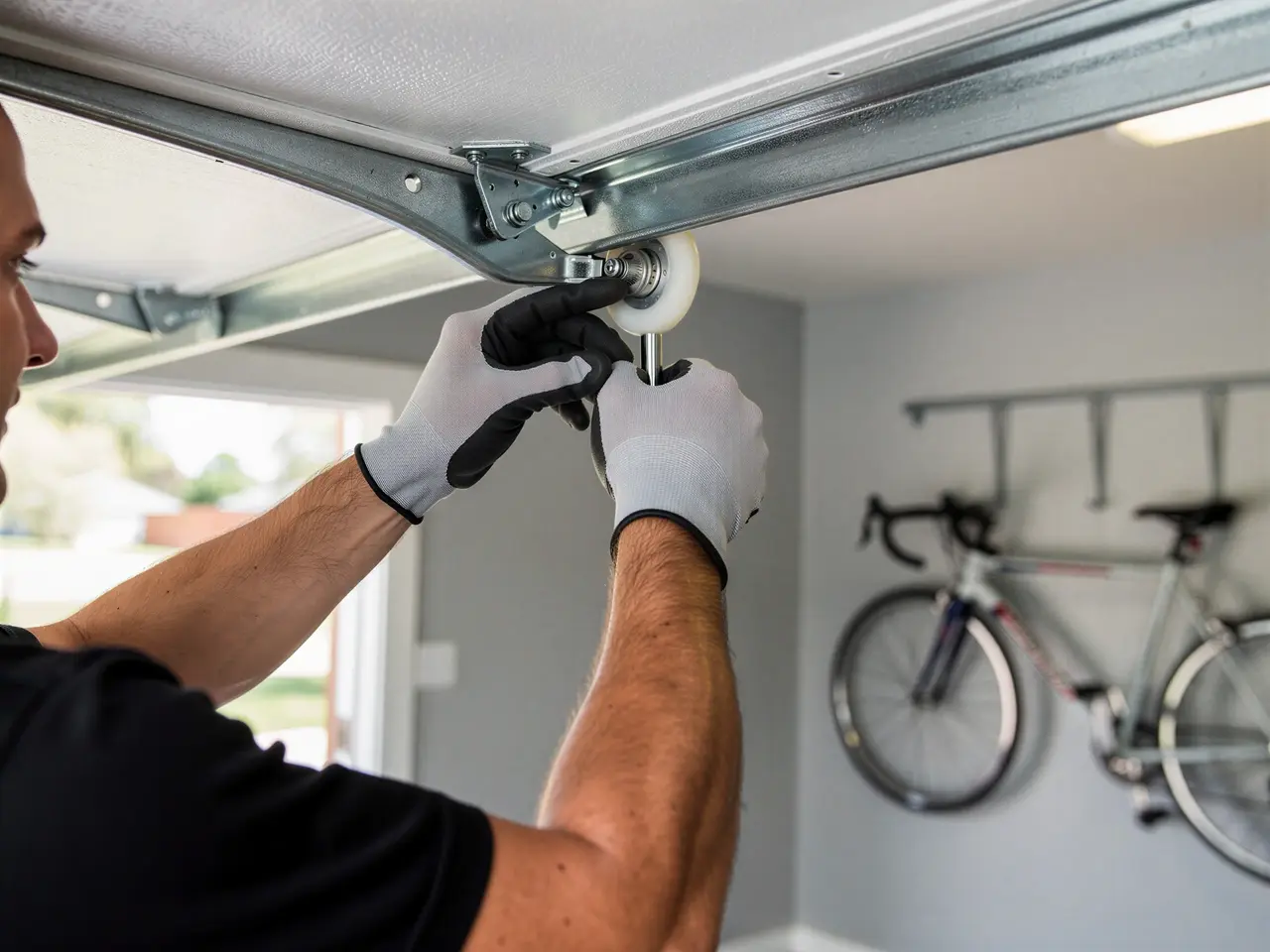
Worn rollers on Upland's older torsion-spring doors cause grinding and sticking tracks. We replace nylon and steel rollers on houses built from the 1960s through the 2000s.
- Repairs & new doors
- Springs & openers
- Serving 4 nearby communities
Why It Happens Here
Most of the garage doors we see in this service area sit on houses built between 1956 and 2007, with a lot of that stock going up in the 1960s and 70s. Doors from that era were set up with steel rollers running in tracks that were never sealed against dust, and three or four decades of use wears the roller stems down to nothing. The bearings dry out, the roller itself goes out of round, and the door starts riding rough in the track instead of gliding.
Climate here runs moderate heat, not the kind of extreme swing that cracks vinyl siding, but enough that a garage bakes through the afternoon and cools fast at night. That daily expansion and contraction loosens roller brackets over the years and dries out whatever lubricant was on the roller stem when the door was installed. On a newer door this isn't an issue yet. On a door that's been riding the same rollers since the Carter or Reagan administration, it's the difference between a quiet door and one that sounds like a shopping cart with a bad wheel.
We see this across the roughly 32 named areas that make up this service territory, wherever the housing dates to that same build window. It's not a defect in any one neighborhood's doors - it's just what 40-plus-year-old steel rollers do.
The Complications
Roller wear rarely shows up alone. By the time a roller is bad enough that a homeowner notices, the track it's been grinding against is usually scored or bent in spots, and the bracket holding that roller may have worked its screws loose from years of vibration. Swap the roller and leave a bent track section in place, and the new roller wears unevenly within a year.
On older torsion-spring setups - common in the 1960s-70s housing we work on throughout this area - the roller brackets are also tied into the cable system near the bottom panel. A roller that's seized rather than just worn can shift load onto that cable attachment point, and we won't replace a roller without checking the cable and bottom bracket at the same time. Skipping that check is how a $200 roller job turns into a cable failure call three months later.
We also run into doors where someone already swapped one or two rollers with mismatched hardware from a hardware-store kit. Mixing stem lengths or roller diameters within the same track puts uneven stress on the door and can throw the whole panel out of alignment. Matching the full set, not just the rollers that look worst, is the only way to fix it properly.
How It Shows Up
The first sign is almost always noise - a grinding or rattling that gets louder as the door opens, worse on the rollers nearest the bottom panel where they carry the most load. Some owners describe it as a shopping-cart wheel sound; others just say the door sounds "tired."
After the noise comes hesitation. The door catches partway up or down, especially on the upper track curve where a worn roller can't hold its line. You may see the door shudder or visibly wobble as it travels, or notice daylight gaps along one side of the track that weren't there before.
In households with an income profile like the area average here - comfortably middle to upper-middle class, per the latest Census figures - we find owners tend to let the noise go for months because the door still technically works. That's usually when a roller finally snaps off the bracket mid-cycle, which is the point where it stops being a maintenance call and becomes an "I can't get my car out" call. Catching it at the grinding-noise stage is cheaper and faster every time.
The DIY Question
Rollers look like a simple swap - pull a pin, drop in a new roller - and on a disconnected, low-tension section of track, that's close to true. The complication is the torsion spring overhead. On the older doors common across this area, the spring is under real load any time the door is down, and the rollers nearest the bottom bracket sit close to cables that are also under tension. Get the sequence wrong and a cable can snap loose with enough force to hurt someone.
We'll be straight about the limitation: we don't talk owners through spring-adjacent roller work over the phone, because the failure mode isn't a redo, it's an injury. If your rollers are on the top section of track, away from the bottom brackets and cables, a confident DIYer can often handle that part solo with nylon replacements from a hardware store.
What we do handle is the full set - matched rollers, track inspection, and a check of the brackets and cable attachment points so the fix holds. If you're not sure which rollers are safe to touch yourself, send us a photo before you start pulling anything apart.
Frequently asked questions
How do I know if it's the rollers and not the opener?
If the door grinds or shudders while moving but the opener motor sounds normal and doesn't strain, it's almost always the rollers or track, not the opener. A struggling or clicking opener points to a different problem - usually springs or the opener's drive mechanism.
Why do my rollers wear out faster than my neighbor's newer house?
Age of the hardware matters more than the house's size or price. A lot of homes in this area date to the 1960s and 70s, which means original or long-serving steel rollers that have simply logged more open-close cycles than anything installed in the last decade.
Can I replace just the worst rollers instead of the whole set?
You can, but mismatched roller stem lengths or diameters put uneven stress on the track and often cause the door to bind within months. We replace the full set so the door travels evenly, even if only a couple of rollers look obviously bad.
Is roller noise dangerous or just annoying?
It starts as annoying, but a roller that's worn enough to grind can eventually snap off its bracket mid-cycle. That's when the door can jam or drop unevenly. Addressing the noise early avoids a sudden, more disruptive failure.
Related services
By Neighborhood
Roller Replacement across the Upland area
We also handle roller replacement in these Upland-area suburbs.
Book garage door service in Upland
Call now or request a quote - tell us what the door is doing and where you are.