
Upland, CA · Garage Door Service
Garage Door Service Built for Upland's 1960s-70s Housing Stock
Upland homes built mostly in the 1960s-70s run original torsion hardware past its life. We service springs, openers, and tracks sized for that era's doors.
- Repairs & new doors
- Springs & openers
- Serving 4 nearby communities
Why It Happens Here
Most of the housing in and around Upland went up between 1956 and 2007, with the median build year sitting around 1970. That matters more than people think when it comes to garage doors. A door and opener installed when a house was built in 1968 is not a door from 2015 - it's heavier steel, older torsion spring sizing, and in a lot of cases the original hardware nobody has touched since. Across the wider area, the 1960s-70s stock dominates, which means the fatigue curve on springs and cables is bunched up: a lot of doors in this service area are hitting the same wear point at roughly the same time, just because they were installed around the same time.
Add the climate. This part of the Inland Empire sits in a moderate-heat band, and daily swings between a cold morning and a hot afternoon put real stress on steel. Torsion springs lose tension cycle by cycle, but heat expansion and contraction on tracks and rollers accelerates that wear on older doors that were never upgraded. A door that would coast another five years in a milder, more stable climate starts showing problems sooner here.
The Complications
Older doors complicate repair in ways a newer door doesn't. A lot of the openers installed on 1960s-70s builds predate modern safety reversal standards, so swapping a single part sometimes means the whole opener needs replacing rather than patching - not because we want to upsell it, but because older units don't have the sensor mounts or wiring for current safety components. Track spacing and spring drums also varied more between manufacturers decades ago, so a universal replacement spring doesn't always fit; it has to be measured and matched.
Homeowner income in this area runs well above the national median, which tends to mean owners want the job done right once rather than patched twice - but that also means we see houses where a previous repair was done cheap and fast, and now the mismatched part is the actual cause of the new problem. We find replacement cables paired with the wrong drum size, or a spring rated for a lighter door bolted onto a heavier original panel. Fixing the complaint means fixing what's underneath it, which sometimes takes longer than the original call implied.
How It Shows Up
The most common call we get from this stretch of the valley is a door that won't open smoothly, or one that slams the last foot of travel instead of settling. That's usually a torsion spring that's lost tension gradually over years of heat cycling, not a sudden break - though sudden breaks happen too, usually on the hottest stretch of the day when the steel is most expanded and under the most load.
On older openers, the second common symptom is a door that reverses for no clear reason, or stops responding to the remote. That's often wiring or a sensor alignment issue on equipment that's never been updated, not a dead opener. A door that's noticeably louder than it used to be, grinding or popping on the way up, usually means rollers original to the house are finally done - which, given the build years common here, is not rare.
The DIY Question
Some of this is fair to handle yourself: lubricating rollers and hinges, tightening visible hardware, clearing the track of debris. None of that requires a call.
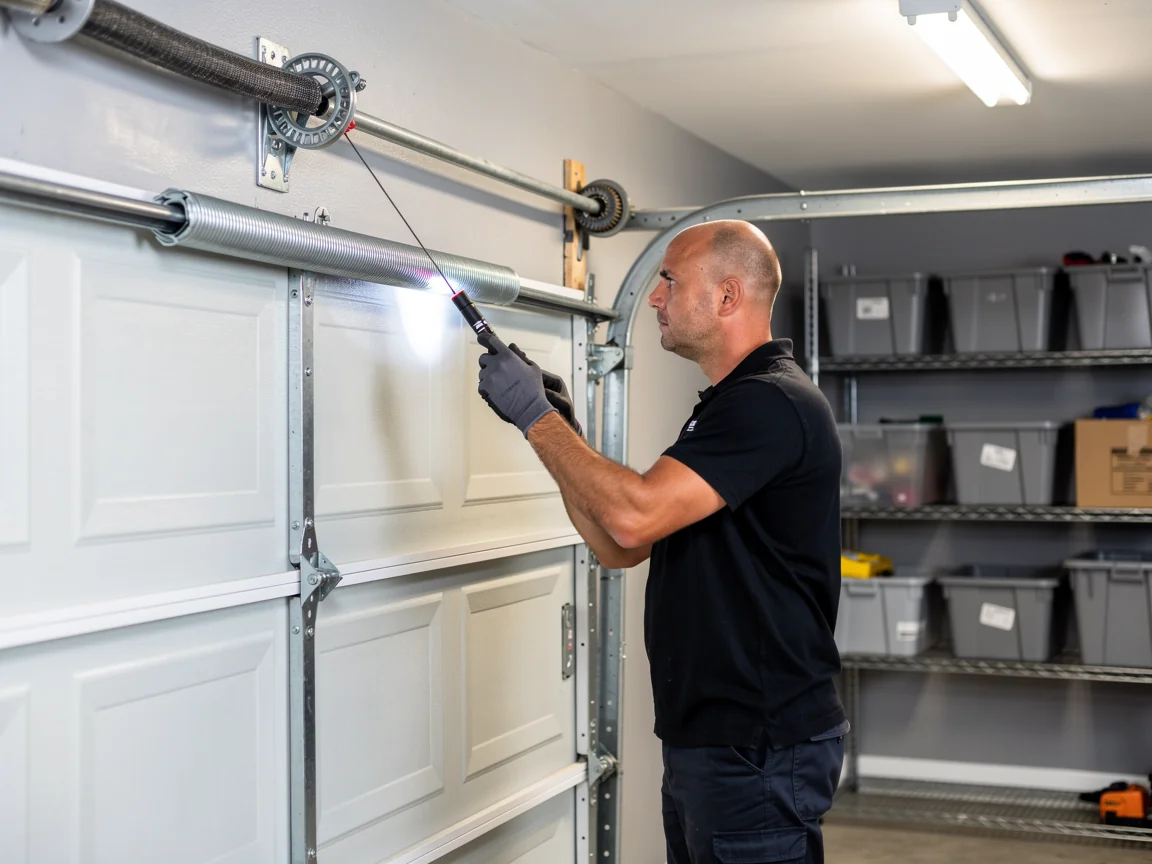
Torsion springs are where we draw the line, and we'll say it plainly: they're under enough stored tension to cause serious injury, and on a door from the 1960s-70s era the spring size and drum setup often isn't labeled or obvious. Guessing wrong on a replacement spring means a door that's either too hard to lift by hand in a power outage or one that slams under its own weight. If your opener predates current safety reversal sensors, that's also not a DIY swap - the mounting and wiring aren't a drop-in match for newer units. We'd rather get a call for something minor than get a call after a spring job gone wrong.
Frequently asked questions
Why do garage doors in Upland seem to fail around the same age?
A lot of the housing here was built in a tight window, mostly through the 1960s and 70s, so the original garage door hardware across many homes is reaching the end of its service life at roughly the same time. It's less about one bad batch of parts and more about a neighborhood built in the same few years.
Does the heat really affect garage door springs?
Yes. This area sits in a moderate-heat climate band, and the daily swing between morning and afternoon temperatures puts repeated expansion and contraction stress on steel springs and tracks. On an older spring that's already fatigued, that cycling is often what pushes it to finally break.
Can I replace a torsion spring myself to save money?
We don't recommend it. Torsion springs hold enough stored tension to cause serious injury, and on older doors common in this area the spring size isn't always labeled, which makes guessing dangerous. It's one of the few jobs here where the DIY route isn't worth the risk.
My opener won't reverse when something's in the way. Is that fixable?
On older openers built before current safety reversal standards, that's common, and sometimes the honest fix is replacing the opener rather than patching a unit that was never built with modern sensor mounts. We'll tell you straight if a repair isn't worth it versus a replacement.
Related services
Related guides
By Neighborhood
Garage Door Service across the Upland area
We also handle garage door service in these Upland-area suburbs.
Book garage door service in Upland
Call now or request a quote - tell us what the door is doing and where you are.