
Upland, CA · Garage Door Service
Garage Doors on Upland's Older Housing Stock
Most Upland homes went up between 1956 and 2007, many with doors from before insulation codes existed. Here's what that means for repairs and replacement.
- Repairs & new doors
- Springs & openers
- Serving 4 nearby communities
The Situation
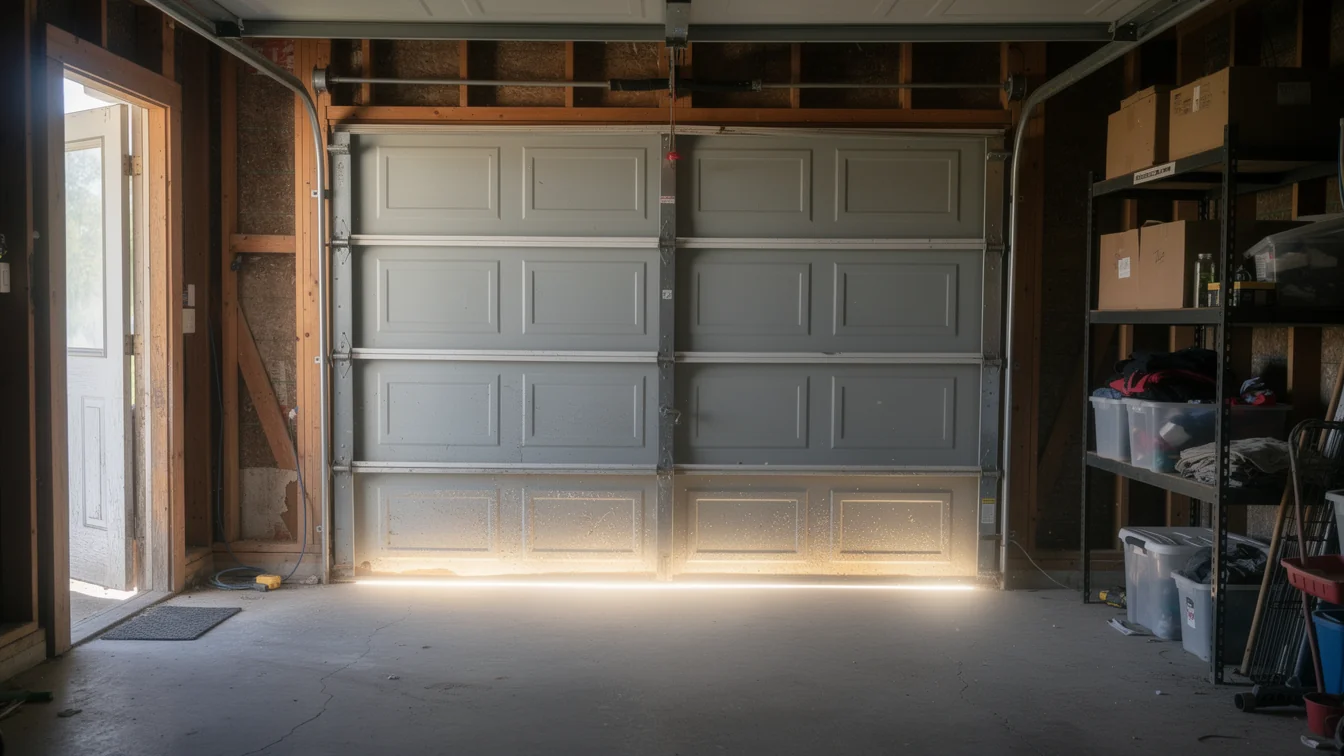
Most houses in Upland went up between 1956 and 2007, with the median landing around 1970. That's the stretch when a lot of tract housing went in fast, and the garage door that came with the house was whatever was standard at the time - usually a single layer of steel or wood, no foam, no thermal break, because there was no insulation code on the opening yet to require one. Across the 32 named areas that make up this part of the 1960s-70s housing stock, that same door shows up again and again: same hardware, same lack of backing, same age. It's not a defect. It's just what builders put in before insulation rules existed for garage doors specifically. The door still works, often for decades, but it was never built to hold back heat or cold, and it was never built with today's spring and cable sizing in mind either. When you're pricing a repair or a replacement on a house from this era, that's the starting point - not the brand on the door, but the decade it came from.
Doing Nothing For Now
If the door still opens, closes, and seals reasonably at the bottom, you don't have to do anything about the insulation gap right now. A lot of these original doors are still structurally sound - steel doesn't insulate but it doesn't fail just because it's bare, either. Where it gets expensive is if you wait until a panel is dented or a hinge is torn and then discover the whole door is an odd legacy size that nobody stocks a matching insulated replacement panel for. At that point you're not patching, you're replacing the whole door, and the lead time on a custom-width unit is longer than people expect. The honest limitation here: we can't tell you from a FACTS sheet whether your specific door is salvageable or not - that's a look-at-it-in-person call, not a blanket rule for houses built in 1970. If the door is quiet, tracks straight, and seals, leaving it alone is a reasonable choice. If it's already loud or sagging, that's a different conversation.
When to Get Help
Call when the door that's been fine for fifty years suddenly isn't - a spring that's lost its tension on a door built before insulation standards is carrying more raw weight per square foot than a modern insulated panel door, because there's no foam core lightening the load calculation the spring was sized for. That mismatch shows up as a door that slams down fast or won't stay open on its own. Also call if you're noticing daylight around the edges or feeling outside air move through the seams - on an original 1960s-70s door that's not a seal problem you can caulk, it's the lack of any insulating layer at all. And if a panel's been dented or rusted through, don't wait on that one; a bare steel panel on an old door rusts from the inside of the dent outward, and it spreads faster than people think. None of this is urgent on a schedule - it's urgent based on what the door is actually doing.
How Local Conditions Play In
This area sits in a moderate heat climate band, which matters more than people assume for a door with no insulation. An uninsulated steel door absorbs afternoon heat and holds it, so the garage runs warmer than the outside air well into the evening - worse if the garage shares a wall with a bedroom or a laundry room, which a lot of these 1970s-era layouts do. San Antonio Heights, three miles out, and Claremont, another three, were built in roughly the same window and carry the same issue; so does Montclair at four miles. With about 182,524 owner-occupied houses among 361,710 households across this service area, and a median household income around $99,568, replacing an old door with an insulated one is a cost a lot of owners here weigh seriously rather than treat as automatic - it's not cheap, and it's not always the first fix needed. The climate doesn't force a replacement on anyone, but it's part of why an insulated door earns its keep here more than in a cooler region.
Frequently asked questions
Is my garage door too old to repair instead of replace?
Age alone doesn't decide it - a door from the 1960s-70s housing stock can often take a new spring, cable, or roller without issue. The problem comes up when a panel is damaged and the door's width or panel style is no longer made, which forces a full replacement rather than a patch.
Why does my garage feel so much hotter than the rest of the house?
If your house was built in the common 1956-2007 window here, your original door likely has no insulating core. In this area's moderate heat climate, a bare steel or wood door absorbs and holds afternoon heat, which raises the temperature of anything attached to that garage, including a shared wall.
Do I need to replace my old door just because it's not insulated?
No. An uninsulated door isn't a failure, just a feature of the decade it was built in, before insulation rules applied to garage doors. It's worth replacing when you want the comfort or efficiency gain, or when the door itself needs major repair anyway - not simply because of its age.
Related garage door services in Upland
More garage door guides
Book garage door service in Upland
Call now or request a quote - tell us what the door is doing and where you are.