
Upland, CA · Garage Door Service
What Actually Happens When We Show Up
A plain look at what happens when Upland Garage Door Pros comes to your house, built around Upland's 1960s-70s housing stock and original hardware.
- Repairs & new doors
- Springs & openers
- Serving 4 nearby communities
The Situation
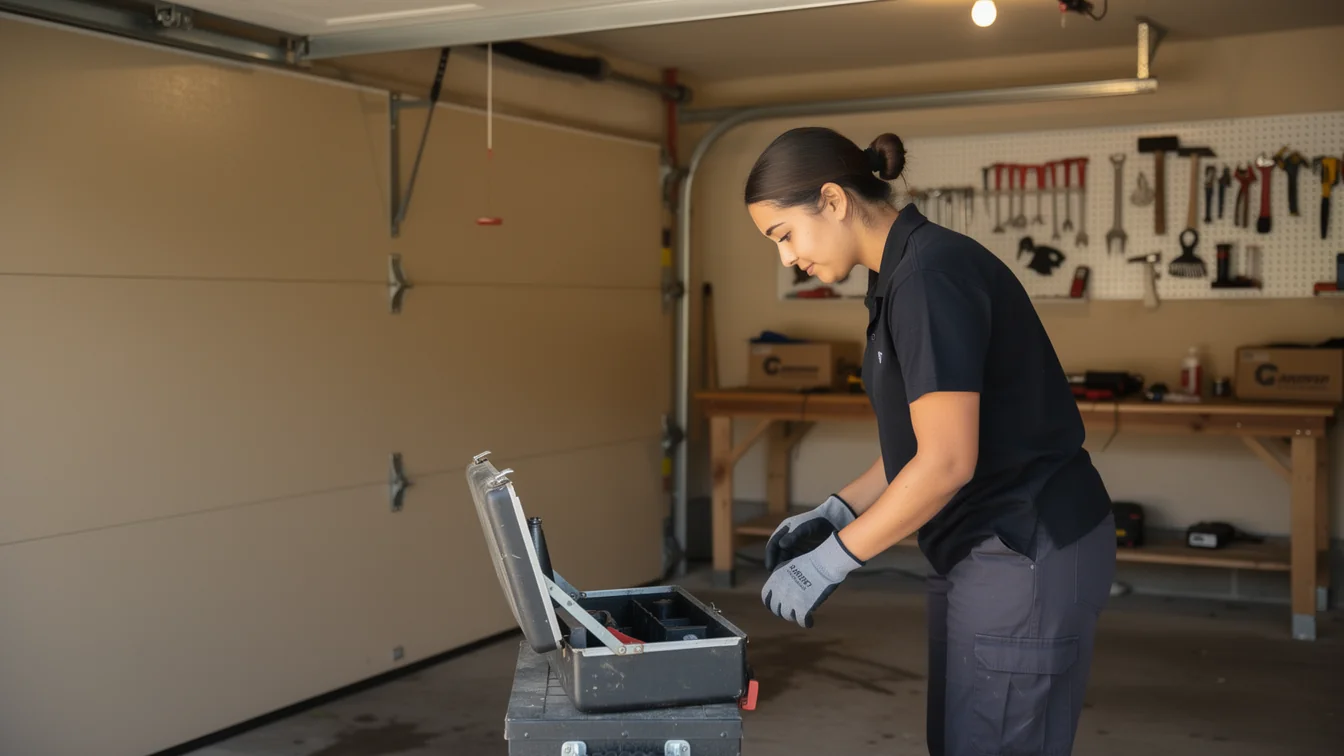
Upland's housing mostly went up between 1956 and 2007, with the median right around 1970, and across the wider service area the bulk of the stock is still that 1960s-to-70s build. That matters for a service call because it means a lot of the doors we look at are original, or close to it: torsion springs sized for hardware nobody stocks on the shelf anymore, openers that predate rolling codes, tracks bent by decades of use rather than one bad bump. A service call starts with us figuring out which era of door we're dealing with before we touch anything. We check the spring type and size, the track alignment, the cable condition, the opener's age and whether its safety reversal still works, and the panel condition where rust or dents have crept in. On a house built in that 1960s-70s window, half the job is often just sourcing the right part for hardware that's older than the homeowner standing next to us. We don't guess at compatibility - if we can't confirm a part fits your specific setup, we say so before we order anything.
Doing Nothing For Now
Not every noisy door needs a truck out that day. If a door built in that mid-century window is still opening and closing on its own weight, tracking straight, and the spring isn't showing rust pitting or stretch, waiting a season is usually fine. Where we draw the line: a cable that's starting to fray, a spring with visible gaps between coils, or an opener that no longer reverses when it hits resistance. Those aren't wait-and-see situations regardless of how old the house is. One honest limitation here - we can't always tell over the phone whether a sound is a dying bearing or a loose bracket, and we'd rather look at it in person than quote you blind. If your household income and the age of your door suggest replacement is close anyway, we'll say that too rather than keep patching an original 1960s-70s unit that's past its reasonable life.
When to Get Help
Call sooner rather than later if the door is noticeably heavier on one side when you lift it manually, if it slams the last foot of travel instead of settling, or if the opener strains and reverses partway through a cycle. On original hardware from the 1960s-70s era common across Upland and the surrounding area, a spring that's lost tension often shows up first as a door that won't stay up when disconnected from the opener - that's a two-person safety issue, not a DIY fix. Also call if a panel has started separating from the roller track, since that usually means the track itself has bowed, not just the panel. We service households across this part of the Inland Valley, and the pattern repeats: older houses with original doors tend to fail at the spring and cable first, not the panel. If your opener motor burns out or the logic board dies, that's a separate conversation from a spring job, and we'll tell you which one you're actually facing before any work starts.
How Local Conditions Play In
Upland sits in a moderate-heat climate band, not the kind of extreme freeze-thaw cycling that cracks concrete slabs or snaps cold-brittle springs the way it does further north. That's a small mercy for door hardware here - metal fatigue on these doors comes more from decades of cycles than from winter shock. What heat does do, especially on a garage facing west or south, is dry out lubricant on tracks and hinges faster and make nylon rollers brittle sooner than the manual says. On a door that's already 50-plus years old, that accelerated wear on top of original hardware is what tends to push a sticking door into a stuck one. We factor that into what we check first on an older Upland house - track lubrication and roller condition get more attention here than they might in a milder climate, simply because the heat load adds up over that much time.
Frequently asked questions
Is my garage door too old to repair?
Depends on what's failed. A dead spring or cable on a door from the 1960s-70s era common here is usually a straightforward repair. If the track is bowed, the panel sections are rusted through, or the opener's logic board is gone, replacement often makes more sense than chasing parts for a 50-year-old unit piece by piece.
Do you carry parts for older torsion springs?
We carry common sizes, but original hardware from houses built in that 1956-2007 window sometimes needs a part we order rather than stock. We'll tell you up front if your job needs a part we have to source, rather than quote a same-day fix we can't actually deliver.
Why does my door feel heavier in summer?
Heat dries out track and hinge lubricant faster and makes nylon rollers stiffen with age. On an original door from the 1960s-70s, that accelerated wear is often what turns a slightly sticky door into one that strains the opener. Regular lubrication helps more here than in milder climates.
Related garage door services in Upland
More garage door guides
Book garage door service in Upland
Call now or request a quote - tell us what the door is doing and where you are.