
Upland, CA · Garage Door Service
Garage Door Cable Repair for Upland Homes
Broken or frayed garage door cables are common in Upland's 1960s-70s housing stock. Same drum and track hardware, decades of wear. Here's why, and how it shows up.
- Repairs & new doors
- Springs & openers
- Serving 4 nearby communities
Why It Happens Here
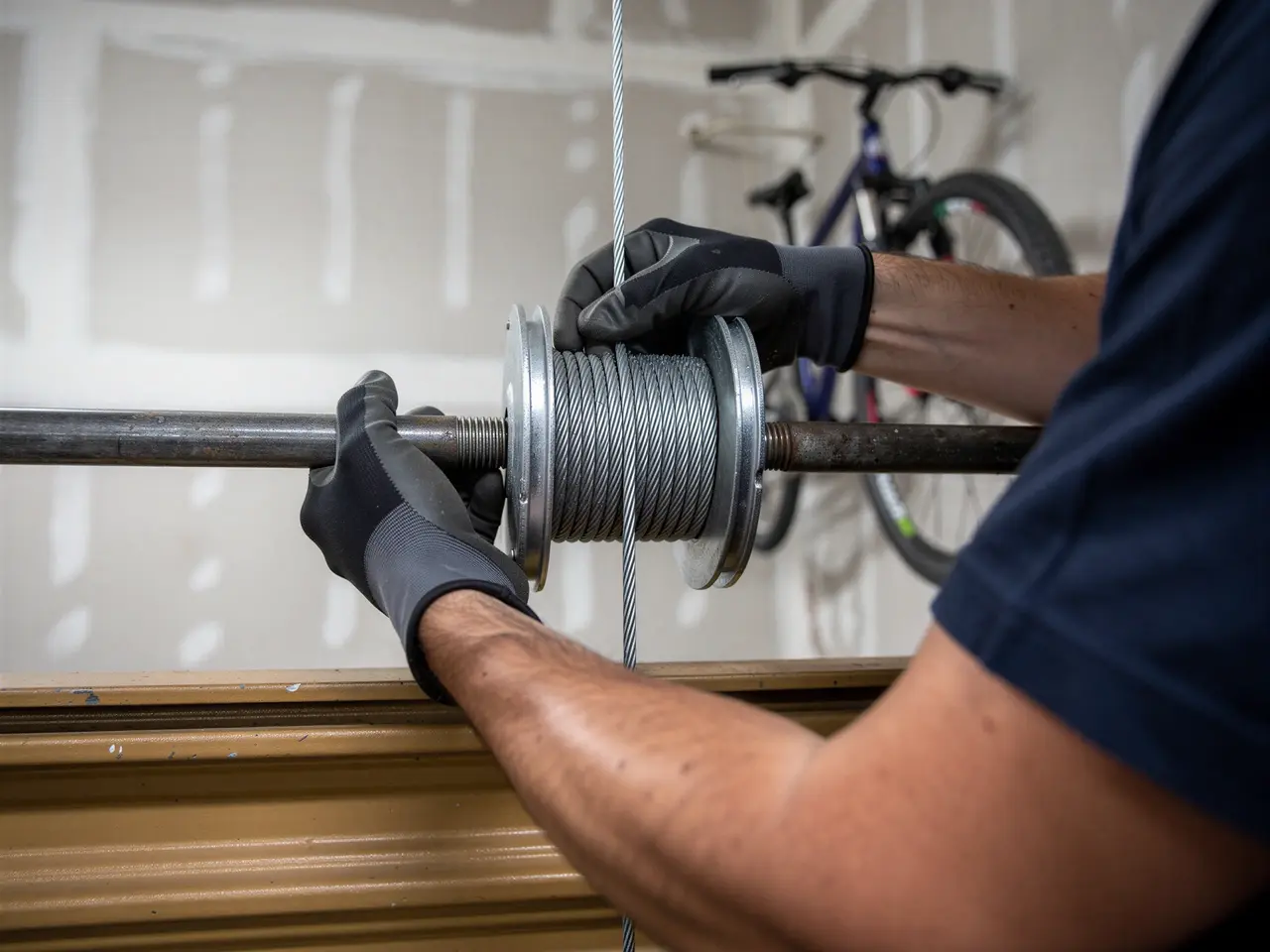
Most of the housing across this part of the valley went up between 1956 and 2007, with the bulk of it dating to the 1960s and 70s. That matters for cables because the original lift cable and drum setups from that era were never built to last fifty-plus years of daily cycling. The galvanized coating on a cable thins out over time, and once it does, the strands start to fray where the cable wraps the drum or runs through the bottom bracket.
Heat plays a part too. This area sits in a moderate heat band, and garages here run hotter than the house for a good chunk of the year. Heat dries out the factory lubricant on the cable and drum, so the cable rides rougher with every cycle instead of feeding smoothly. On an older door that's already carrying decades of cycles, that extra friction is often what pushes a thinning cable past the point of holding.
We're not talking about one bad batch of hardware. It's the math of old stock meeting a hot garage, year after year, until a strand lets go.
The Complications
A broken cable rarely stays a simple one-part job. On a torsion system, a snapped cable on one side usually means the door has been running unevenly for a while before it finally gives, which can bend the track or rack up wear on the rollers on that side. If the door was original to a house built in the 1960s or 70s, the drums themselves are often undersized or mismatched to current cable specs, so a straight swap isn't always possible without also replacing the drum.
There's also the spring to think about. Cables and springs work as a pair, and a cable failure under load sometimes means the spring was already past its rated cycle count and took the extra strain that caused the snap. We won't put a new cable on a spring that's clearly near the end of its life - that's a callback waiting to happen, and we'd rather tell you now than have the door fail again in a month.
How It Shows Up
The most obvious sign is a door that won't move, with one side hanging lower than the other or a cable visibly unspooled off the drum. Short of a full snap, you'll often hear it coming first: a popping or clicking sound as the door opens or closes, which is usually frayed strands catching on the drum groove.
Some owners notice the door feels heavier to lift by hand, or the opener strains and reverses partway through a cycle. That's a cable that's lost some of its strands and can't carry its share of the door's weight anymore, so the opener or the remaining hardware is picking up the slack. If you see loose wire sticking out near the bottom roller bracket, stop using the door. A cable under tension that lets go while the door is moving can whip hard enough to hurt someone or crack a panel.
The DIY Question
A garage door cable is under real tension even with the door down, because it's tied into the spring system. This isn't a job for a ladder and a pair of pliers. Winding or unwinding a torsion spring without the right bars, or working near a cable under load, is how people lose fingers - that's not an exaggeration, it's why we carry the tools we do.
What you can safely check yourself: look at the cable where it wraps the bottom bracket for visible fraying, and watch the door move through one full cycle to see if it's running level. If you see rust, kinks, or strands sticking out, that's enough to call it in rather than wait and see. We'll be straight with you if a repair isn't worth it - on a door old enough that the drums and track are mismatched to current parts, sometimes replacing the hardware set costs less in the long run than patching it piece by piece.
Frequently asked questions
Why did my garage door cable snap with no warning?
It rarely happens with no warning - most cables fray gradually where they wrap the drum or bottom bracket, but the signs (popping sounds, a door that feels heavier, slight unevenness) are easy to miss until a strand finally lets go. Homes built in the 1960s and 70s around here are especially prone to this because the original hardware is decades past its expected life.
Can I replace just the cable or do I need the spring too?
Sometimes it's just the cable, but a snapped cable often means the spring was already near the end of its rated cycles and took extra strain. We check both before quoting the job, because putting a new cable on a worn-out spring usually means another failure soon after.
Is it safe to open my garage door manually if a cable is broken?
No. A broken cable means the door's weight isn't balanced the way it's supposed to be, and the remaining cable or spring is carrying more load than it's rated for. Leave the door where it is and call for a repair rather than forcing it up or down by hand.
How much does cable repair usually involve beyond the cable itself?
On older torsion setups, drums, rollers, and track alignment are often affected by a cable failure, since the door tends to run unevenly before the cable actually breaks. We inspect the full system rather than just swapping the cable, because a cable-only fix on bent track or worn drums won't hold.
By Neighborhood
Cable Repair across the Upland area
We also handle cable repair in these Upland-area suburbs.
Book garage door service in Upland
Call now or request a quote - tell us what the door is doing and where you are.