
Upland, CA · Garage Door Service
Garage Door Maintenance for Eastvale's Newer Tract Homes
Eastvale's garage doors mostly went up around 2007, newer than the area's 1970 median. Here's what keeps a factory-torsion steel door running on this newer stock.
- Repairs & new doors
- Springs & openers
- Serving 4 nearby communities
The DIY Question
Most garage doors in Eastvale are steel sectional, builder-installed when the tract was new. The area's housing overall runs from 1956 to 2007 with a median around 1970, but Eastvale sits at the newer end of that range, closer to 2007 itself. That matters for what's under the hood: these are factory torsion systems, not the side-mounted spring setups you'd find on an older door, and the openings tend to be wider, built for two-car and sometimes three-car garages that came standard on newer production homes.
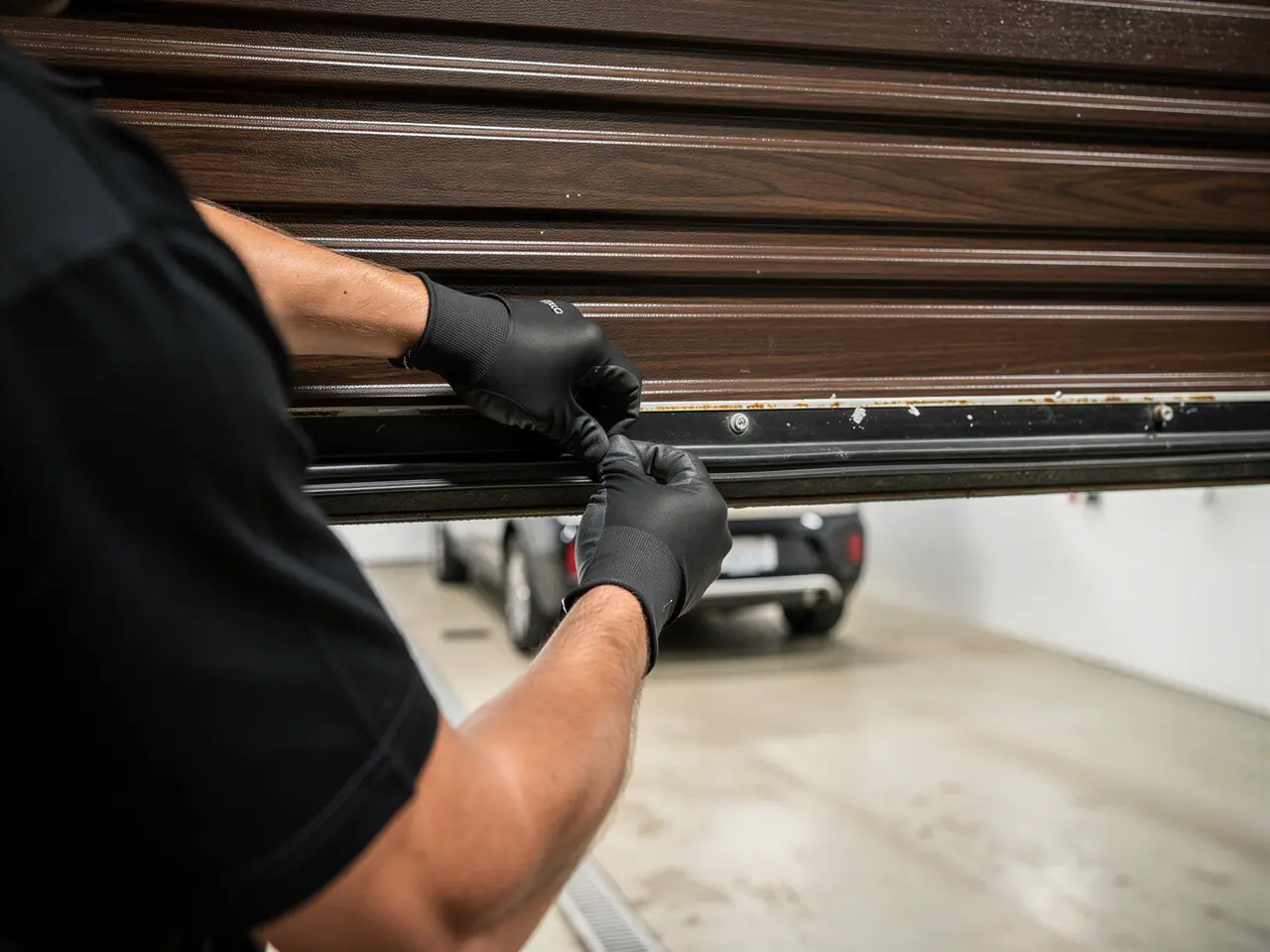
What a homeowner can handle: wiping down and lubricating rollers and hinges, checking the weatherstrip at the bottom panel, testing the auto-reverse by placing a 2x4 in the door's path, and listening for new grinding or popping sounds during a cycle. What you shouldn't touch is the torsion spring itself or anything on the horizontal shaft above the door - that's under enough tension to cause real injury, and on a factory system it's often a slightly different cable routing than what a repair tech sees on an older door. If a cycle suddenly feels harder to lift by hand, stop opening it and call.
The Complications
A door built around 2007 is now old enough that its original torsion spring is approaching or past typical cycle life, even though the house itself still reads as newer construction. Homeowners here sometimes assume a newer house means a newer door problem-free for another decade, but spring wear runs on cycle count and age, not on how new the surrounding neighborhood looks.
The other complication is the weatherstrip and vinyl seals. This area sits in a moderate-heat climate band, and PVC bottom seals and side weatherstrip on builder-grade doors get brittle and crack under repeated heat exposure faster than the steel panel itself shows wear. On a door this age, a cracked seal is usually the first visible sign that other components are also due for a look, not a standalone fix.
Three-car garage doors, common on the newer tract layouts here, also carry heavier opener loads on the same builder-grade chain-drive units installed at construction. Those units weren't always sized with headroom for the heavier door, which shows up as slower travel time or a chain that needs more frequent tensioning than a narrower door would.
What the Repair Takes
A maintenance visit on a 2007-era door starts with the torsion spring and cable condition, since that's the part most likely to be original and most likely to be nearing the end of its rated cycles. After that it's track alignment, roller wear, opener chain or belt tension, and the weatherstrip seals that take the brunt of the heat here.
One honest limitation: this isn't a same-day emergency stop for us. We run out of Upland, about 12 miles out, so routine maintenance in Eastvale gets scheduled rather than handled as a drop-in, and parts for some builder-installed opener models can take longer to source than a universal replacement would. If a spring fails outright between visits, that's a different call than a maintenance appointment, and we'll tell you straight if the fix is a spring swap or if the door's hardware is worn enough that replacement makes more sense than another repair.
The Cost of This Job
We're not going to put a number here that doesn't match what you'd actually be quoted, because cost on a maintenance visit depends on which parts need attention - a spring nearing end of life costs more to address than a weatherstrip swap, and a three-car door with a heavier opener load is a different job than a standard two-car door.
What we can say: Eastvale's households carry a median income well above the wider service area's figure, and that often shows up in how maintenance gets scheduled rather than deferred - homeowners here are more likely to call before a spring fails than after. That's the right order to do it in. A spring that lets go while the door is open can drop a 150-plus pound panel, and catching wear during a maintenance check is cheaper and safer than an emergency replacement after it breaks.
Why It Happens Here
Eastvale's housing stock is concentrated around a 2007 build-out, which puts it at the newer edge of the broader service area's 1956-to-2007 range. That timing means a lot of the original hardware - torsion springs, chain-drive openers, vinyl seals - installed during that construction wave is now reaching the age where wear shows up consistently across the neighborhood at close to the same time, rather than being scattered the way it would be in an area with mixed-era housing.
The area's median household income, well above the wider service area's figure, also shapes the pattern: Eastvale homeowners tend to maintain ahead of failure rather than wait for a dead spring, which is part of why a maintenance visit here is often about catching early wear instead of responding to something already broken. Combine that with the moderate-heat climate band's effect on seals and plastic components, and you get a fairly predictable maintenance curve for doors of this specific age.
Frequently asked questions
Are Eastvale's garage doors a different age than the rest of the Upland service area?
Yes. The wider service area's housing spans 1956 to 2007 with a median around 1970, but Eastvale's stock sits at the newer end, with a median build year around 2007. That means factory torsion systems and wider two- and three-car openings rather than the older side-mounted hardware found elsewhere.
Does a newer house mean the garage door doesn't need maintenance yet?
No. Spring wear tracks cycle count and age, not how new the house looks. A door installed when Eastvale's tract homes went up around 2007 is now old enough that its original spring is approaching typical end-of-life, even though the surrounding construction still reads as newer.
Do you have a crew based in Eastvale for same-day visits?
No. We work out of Upland, about 12 miles away, so Eastvale maintenance visits get scheduled rather than handled as a drop-in. We're upfront about that rather than promising a response time we can't back up.
Why do seals crack faster on these doors?
Eastvale sits in a moderate-heat climate band, and the PVC bottom seals and vinyl weatherstrip on builder-grade doors get brittle under repeated heat exposure faster than the steel panel shows wear. A cracked seal on a door this age is often the first visible sign other components need a look too.
Book garage door service in Upland
Call now or request a quote - tell us what the door is doing and where you are.