
Upland, CA · Garage Door Service
Why Garage Doors in Upland Slip Off Their Tracks
In Upland, homes built mostly between the 1960s and 1980s often develop track misalignment from settling and heat-driven expansion. Here's why it happens.
- Repairs & new doors
- Springs & openers
- Serving 4 nearby communities
The Situation
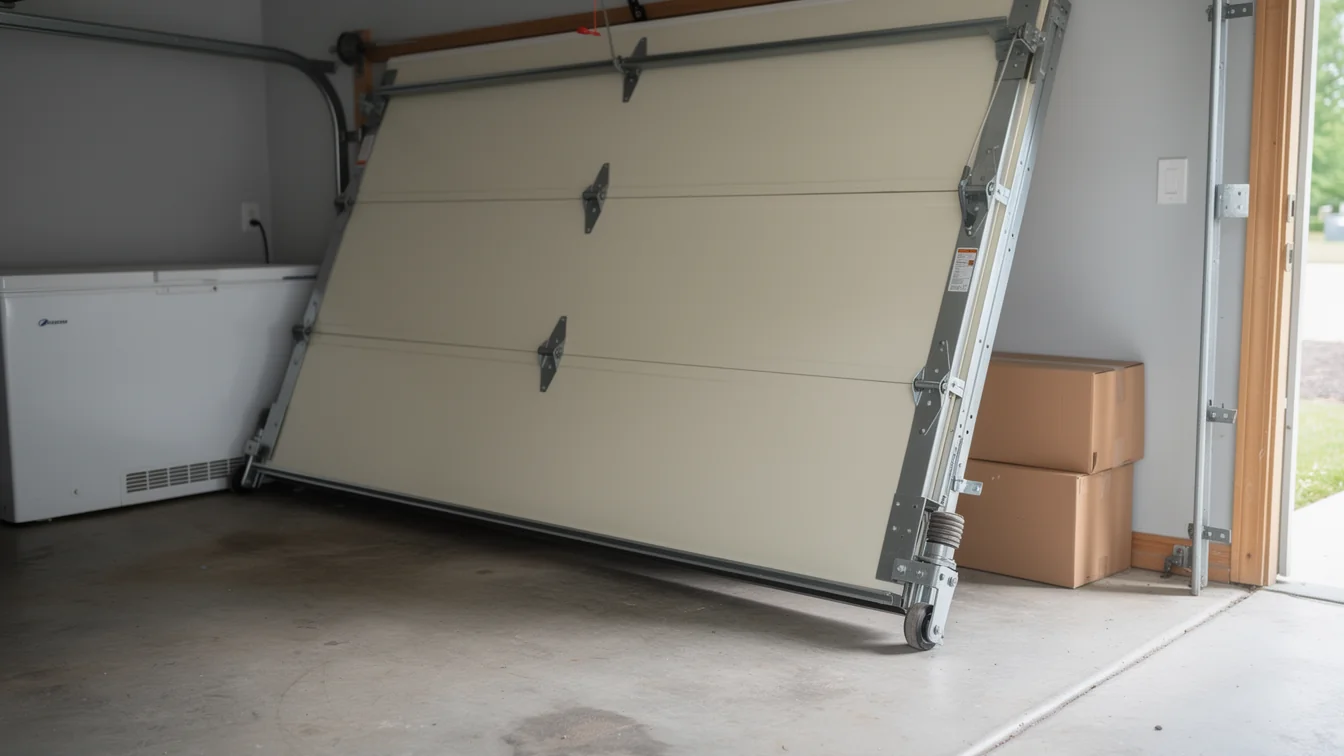
Upland's housing stock mostly went up between 1956 and 2007, with the median build year sitting around 1970. That means a lot of the doors we look at are original equipment on original track, or a replacement door hung on the same track brackets from the Nixon era. Track brackets get fastened to the framing with lag screws, and over fifty-plus years that wood dries out, shrinks, and lets the screws work loose. Add a door that's been lifted and lowered tens of thousands of times, and the track starts to pull away from true, usually at the top bracket first. We see this across the whole stretch of 1960s and 70s construction common to this part of the valley, not just on one block. It isn't a defect in the door. It's what happens to a mechanical system bolted to a house that's been through five decades of seasonal movement. The track itself rarely fails outright; it's the fasteners holding it to the jamb and header that give first, and once one bracket shifts, the whole rail bows out of alignment with the rollers.
Doing Nothing For Now
A door that's slightly off track doesn't always jump the rail right away, and plenty of owners run theirs for months hearing a grind or a knock without anything catastrophic happening. The real cost of waiting is wear: rollers riding against a bowed track chew up their bearings faster, and a motor straining against resistance it wasn't built to fight shortens the opener's life along with it. In Upland's heat, metal track expands during the day and contracts overnight, which is a normal cycle any track handles fine when it's properly fastened - but a track that's already loose at one bracket gets pushed further out of line by that daily flex. We won't tell you a cosmetic rattle means the sky is falling. It doesn't. But a door that binds, catches, or makes a new sound it didn't make last month is telling you the bracket work needed to happen already, and the parts wear faster for every week it doesn't.
When to Get Help
Call when the door hesitates partway through its travel, when you can see daylight between the roller and the track at any point, or when one side of the door visibly rises faster than the other. Those are signs the track has moved enough that the rollers aren't tracking square anymore, and running the opener through that resistance repeatedly is what turns a bracket adjustment into a bent rail. If the track has a visible kink or crimp, stop using the opener and operate the door by hand until someone looks at it - a bent section under motor load is how cables jump their drums. We'll be straight with you: if the track is original to a house built in the 1960s or 70s and it's badly bowed rather than just loose, realigning it is sometimes a patch on hardware that's simply reached the end of its service life, and replacing the track outright is the more honest fix.
How Local Conditions Play In
Upland sits in a moderate-heat climate band, which means the track and hardware go through real daily temperature swings without the extreme highs that cause rapid metal fatigue elsewhere. That's good news for the track itself - it isn't the main driver of failure here. The driver is age: houses built with a median year around 1970 have had five decades of door cycles, garage temperature swings, and settling to work fasteners loose. We see the same pattern across the nearby communities with similar-era construction, including San Antonio Heights and Claremont a few miles off and Montclair just beyond that, where the building stock runs the same 1960s-to-70s range. A track problem in a house like that is almost always a hardware-and-fastener issue built up over years, not a one-time event from a storm or a single hard knock.
Frequently asked questions
Why did my garage door suddenly come off the track?
Usually it isn't sudden - a bracket has been working loose for a while and the last cycle was the one that let the roller slip free. In houses from Upland's common 1960s-70s building era, the lag screws holding the track bracket to the framing have had decades to loosen, and once one lets go the track bows enough for a roller to pop out.
Does Upland's heat affect garage door tracks?
Upland sits in a moderate-heat band, so the daily expansion and contraction of the track metal is normal and not usually enough on its own to cause failure. It becomes a factor only on track that's already loose at the brackets - the daily flex pushes a weak point further out of alignment faster than it would on a tight track.
Is it safe to keep using a garage door that's slightly off track?
For a short while, often yes, but every cycle wears the rollers and motor harder against the misalignment. Stop using the opener if you see a kink in the rail, daylight between a roller and the track, or one side rising faster than the other - those point to a track that could let a cable or roller jump under load.
Is it worth fixing an old track or replacing it?
If the track is original to a house built decades ago and it's bowed rather than just loose at one bracket, realigning it is often a short-term patch. We'll tell you honestly when a track has reached the point where replacement makes more sense than another adjustment.
Related garage door services in Upland
More garage door guides
Book garage door service in Upland
Call now or request a quote - tell us what the door is doing and where you are.